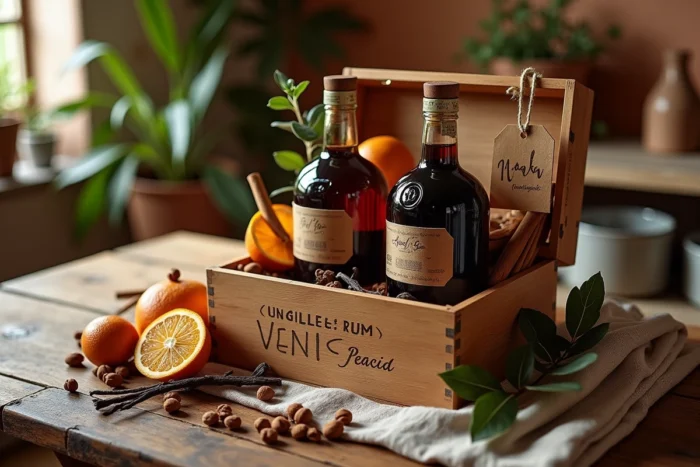
Arranged rum refers to a blend of rum, fruits, spices, or herbs, left to macerate for several weeks. Presented in a gift box, this type of gift is based on a simple principle: to offer a tasting experience ready to share, with flavors that evolve over time. The box format adds a dimension of discovery, as it often brings together several recipes or multiple preparation steps in one set.
Arranged rum in a gift box and regulations: what the designation guarantees
Most content about arranged rum gift boxes focuses on the tasting pleasure. They overlook a technical point that changes the perception of the gift: the term “rum” is regulated by European regulation 2019/787, in effect since May 2021.
This text reserves the term “rum” for sugarcane distillates that meet strict criteria. Distillation must occur at less than 96% vol., the final degree cannot drop below 37.5% vol., and sweetness is capped. Flavoring the base distillate is prohibited, with only caramel being tolerated as a coloring agent.
When a box clearly states “rum” on the base and specifies that fruits, spices, or vanilla are added later for maceration, the recipient knows exactly what they are receiving. This is a concrete advantage over preparations labeled “arranged drink” or “arranged cocktail,” where the nature of the distillate remains vague. Before giving an arranged rum gift, checking that the base carries the regulatory mention “rum” protects against unpleasant surprises.

Composition of an arranged rum gift box: the elements that make a difference
Not all gift boxes are created equal. The contents vary by producer, and a few details separate a generic gift from one truly designed for sharing.
The base: agricultural rum or molasses rum
A box built around an agricultural rum (distilled directly from fresh sugarcane juice) will offer herbaceous and vegetal aromatic profiles. A box using molasses rum (or traditional rum) will provide rounder notes, often leaning towards caramel or ripe fruits.
This choice of base directly influences compatibility with maceration ingredients. Agricultural rum pairs well with bold spices (pepper, ginger), while molasses rum naturally associates with vanilla or candied fruits.
The maceration ingredients
The most interesting boxes detail each ingredient with its origin. Here are the components frequently found:
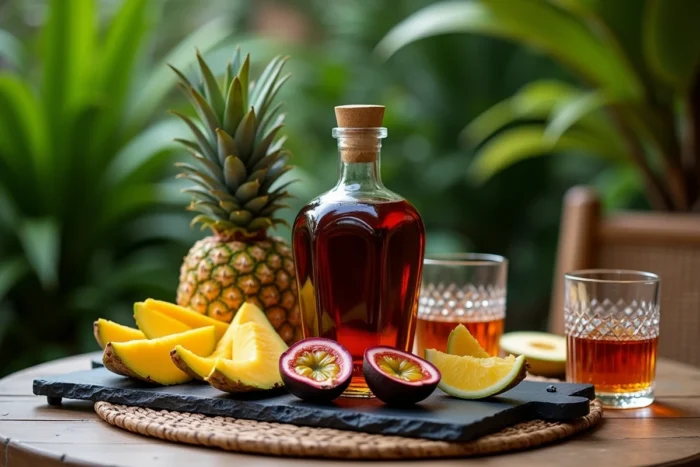
- Dried or dehydrated fruits (pineapple, mango, citrus), which gradually release their aromas over the weeks of maceration
- Whole spices (cinnamon sticks, vanilla pods, tonka beans), measured to avoid masking the character of the rum
- Herbs or zests (lemongrass, kaffir lime, orange peel), which add freshness to the final blend
A good box measures its ingredients for a precise bottle, avoiding proportion errors encountered when assembling a recipe found online.
Arranged rum to share: why the gift box format changes the game
Giving a bottle of spirits remains a classic gesture. The arranged rum box stands out because it transforms the gift into a collective activity.
With a preparation kit, the recipient initiates the maceration, monitors the evolution of flavors, and tastes at regular intervals. This process spans several weeks. The gift is not consumed in one evening but extends over time, making it memorable.
The multi-recipe format offered by some boxes takes this logic further. Three or four bags of different blends allow for the preparation of as many variations, which can then be compared during a tasting among friends. The participatory aspect transforms a consumer product into a moment of conviviality.
Criteria for choosing an arranged rum gift box for a successful gift
Rather than listing dozens of references, let’s focus on the three criteria that truly determine the quality of a gift box.
Transparency of ingredients and the rum used
A box that precisely names the base rum (origin, type of distillation) and lists each spice or fruit with its weight inspires confidence. Boxes that simply mention “natural flavors” without further detail raise questions about the actual quality of the product.
Packaging and presentation suitable for gifting
Packaging plays a concrete role: it protects the ingredients from light and moisture, two factors that degrade spices and dried fruits. A wooden or thick cardboard box with separate compartments is not just an aesthetic choice; it preserves the quality of the ingredients until opened.
Inclusion of glasses or tasting accessories
Some boxes include glasses suitable for tasting rum. This detail may seem secondary, but it enhances the “ready to share” aspect of the gift. The recipient has nothing else to buy to start the experience.
- Check that the base rum carries the regulatory mention “rum” and not a generic term
- Prefer boxes that specify the recommended maceration time for each recipe
- Ensure that the ingredients are packaged separately to guarantee their freshness
- Choose a box with at least two different recipes to encourage comparison during tasting
The arranged rum in a gift box derives its strength from a balance between quality product and participatory format. The European regulation on the designation “rum” offers a safety net rarely mentioned, but which distinguishes a true arranged rum box from a preparation without guarantees on the alcoholic base. There remains one criterion that only the recipient can evaluate: the pleasure of watching the fruits slowly swell in the bottle, week after week, while waiting for the moment to share the result.