
Alain Bauer is one of the most publicized criminologists in France, sought after by successive governments on security issues. His marital life, however, has never been the subject of public communication. No accessible primary source documents a marriage, and no wife is identified in the biographies, interviews, or online archives available to date.
Marriage Archives in France: What the Records Really Allow You to Verify
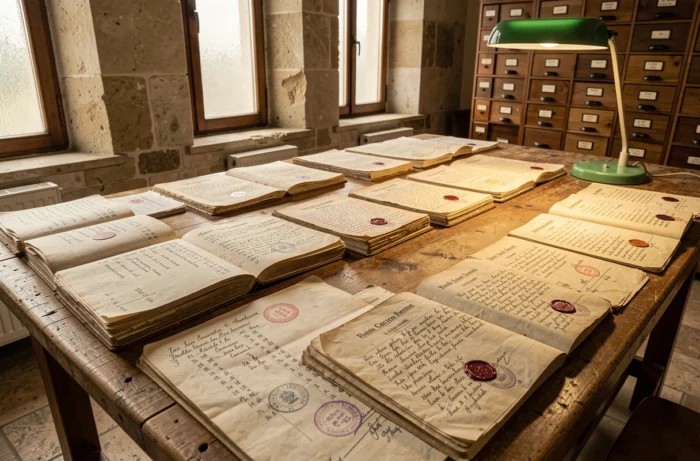
Before seeking information about a celebrity’s marriage, it is essential to understand what French archives actually make available. Civil status records are not all freely accessible, and the confusion between historical archives and recent acts skews many searches.
In France, marriage certificates only become freely communicable after a period set by the Heritage Code (article L. 213-2). For a living person, access to a recent marriage certificate is subject to distinct rules: only the interested parties, their ascendants, descendants, or the prosecutor can obtain a full copy.
There is also no unique national portal to verify all marriages from municipality to municipality. The records are scattered between town halls and departmental archives. FranceArchives directs to the competent services, but does not centralize the acts themselves. For anyone wishing to document the marriage of Alain Bauer and his wife, this administrative reality constitutes a substantial obstacle, not just a procedural detail.
| Type of Source | Public Access | Main Limitation |
|---|---|---|
| Civil status records (acts over 75 years old) | Free in the room or online (departmental archives) | Does not cover recent acts |
| Recent marriage certificates (under 75 years old) | Restricted to the parties concerned | Justified request required |
| FranceArchives (national portal) | Free | Guidance to services, no direct consultation of acts |
| Online genealogical databases | Variable (free or paid) | Uneven coverage depending on departments |
Alain Bauer and Privacy: Why No Marital Information Circulates
Alain Bauer’s discretion regarding his family life is not a matter of media oversight. Interviews published over several decades show a consistent pattern: he answers security questions, never personal ones.
His family origins are documented. Born on May 8, 1962, in the 13th arrondissement of Paris, son of Georges Bauer and Monique Ejzenberg, textile merchants, he sometimes mentions this family background. However, there is no mention of a wife, marriage, or children in authorized biographies or accessible parliamentary hearings.
This silence is not trivial for such an exposed man. Alain Bauer publicly intervenes after every attack or major news event, advising political leaders from opposing sides (Nicolas Sarkozy and then Manuel Valls, for whom he is the godfather of the second son). His professional sphere is transparent, his intimate sphere locked down.
The Recurring Confusion with Axel Bauer
Some searches for “Bauer marriage” lead to Axel Bauer, the singer, whose romantic life has been publicized. The partial homonymy generates documentary noise that pollutes the results. Distinguishing the two paths is a prerequisite for any serious research.
Public Photo and Proof of Marriage: A Distinction Not to Be Ignored
A photograph of Alain Bauer alongside Franka Holtmann, at the baptism of a boat, has circulated online. This image attests to a common presence at an event, not a marital link. The caption of a photo has no value as a civil status act.
This type of shortcut is common in searches about the private lives of public figures. Three criteria allow for the assessment of the reliability of information about a marriage:
- The existence of a civil status act or a mention in the margin of a birth certificate, the only legal proof of marriage under French law.
- A public declaration by the individual or their immediate entourage, in an identifiable context (interview, autobiography, press release).
- A communicable archival document (old parish register, consular transcription), consultable in a recognized archive service.
For Alain Bauer, none of these three criteria are met to date.
Right to Privacy and Limits of Online Research
Article 9 of the Civil Code protects the privacy of every person, including public figures. This protection explicitly covers marital status. Publishing unverified information about an individual’s marriage can engage the liability of the person disseminating it.
Media notoriety does not eliminate the right to silence about one’s marital life. The fact that Alain Bauer is regularly invited on television shows or heard by parliamentary committees does not make his personal life accessible to the public.
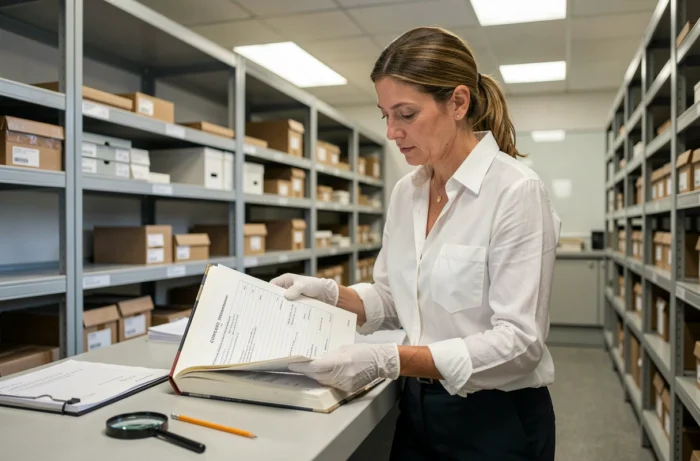
Online genealogical databases, often cited as a resource, have uneven coverage depending on the departments and are only reliable for old acts. For recent acts, the only route remains a direct request to the town hall of the place of celebration, reserved for authorized individuals.
- Search engines index secondary pages, not civil status acts.
- Departmental archive portals are gradually digitizing their collections, but recent acts remain excluded.
- No private database can replace an official act to establish a civil status fact.
The absence of public information about Alain Bauer’s marriage is neither a mystery nor a documentary gap. It reflects a combination of legal protection, personal choice, and archival constraints. As long as no communicable act or direct declaration exists, any assertion on this subject remains unverified.