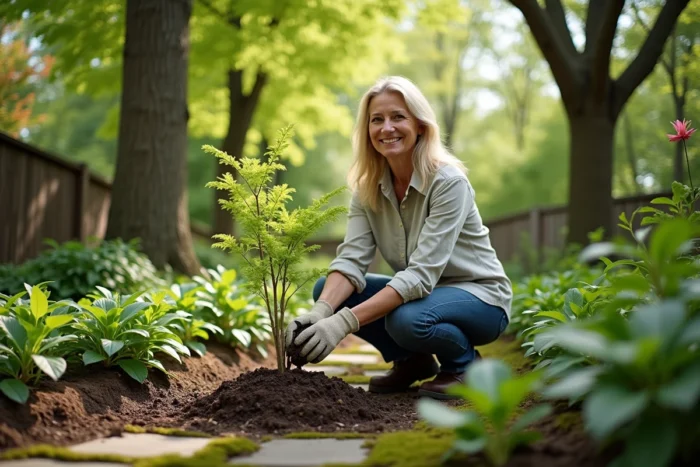
All trees produce oxygen through photosynthesis, but the amount varies depending on leaf area, growth rate, and growing conditions. Comparing species requires reasoning under equivalent conditions: soil, sunlight, and the age of the subject. This ranking highlights seven species suitable for a specific garden in France, intersecting their oxygen production capacity with their ease of planting at home.
1. Paulownia tomentosa
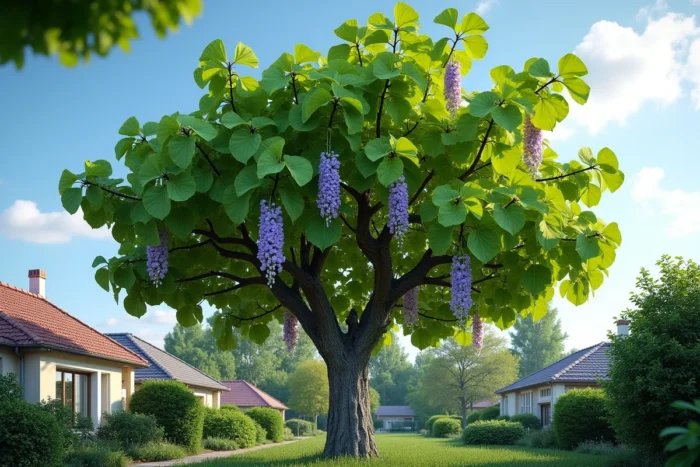
The paulownia, sometimes called the imperial tree, is the one most often mentioned when talking about trees that generate the most oxygen in a residential context. Its growth is among the fastest of all species cultivated in temperate climates, resulting in particularly active photosynthesis from the very first years.
Its deciduous leaves, very large, provide a leaf area significantly greater than that of a typical hardwood. Native to Asia, it withstands cold well, tolerates urban pollution, and prefers rich, humus-filled soils with full sun exposure. Its clusters of purple flowers with a violet scent attract bees, making it an ally for biodiversity as well.
However, its vigorous growth leads to rapid overcrowding. Plan for a clear location, away from pipes and foundations.
2. Pedunculate oak
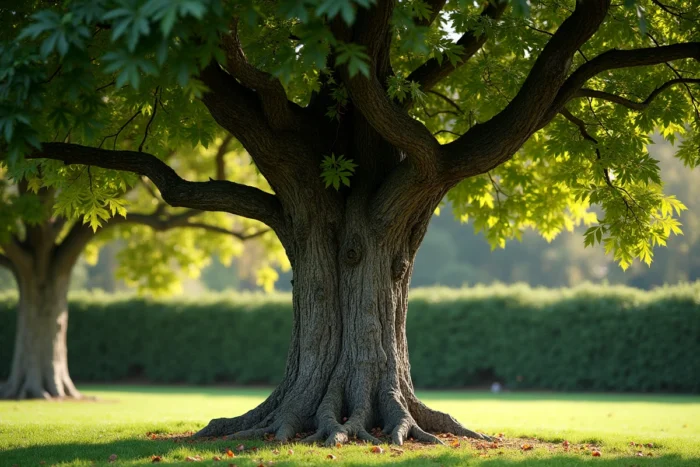
The oak is a pillar of French forests and one of the most effective species for long-term oxygen production. Its exceptional longevity and dense canopy allow it to accumulate considerable leaf biomass over the decades.
A mature oak absorbs more carbon than a young fast-growing tree, making it a long-term investment. The pedunculate oak adapts to most French soils, including clay soils, provided there is enough space for its roots.
The downside: its slow growth. In the early years, its oxygen production remains modest compared to that of the paulownia. It is a relevant choice for those considering their garden on a multi-generational scale.
3. Field maple
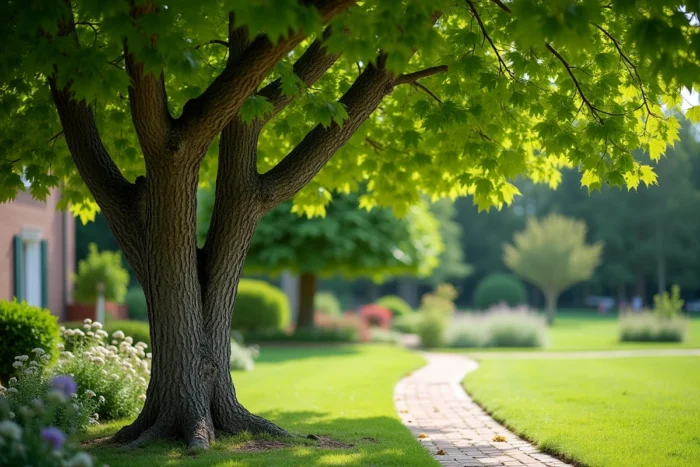
The field maple combines dense foliage and a manageable size for a medium-sized garden. Unlike the Japanese maple, which is often ornamental and small, the field maple develops a fairly wide canopy to generate significant photosynthesis.
It tolerates most soils, including calcareous ones, and withstands drought well once established. Its adaptation to the French climate makes it a versatile species for gardens in both the north and south. Additionally, it creates a cool microclimate beneath its canopy, making it doubly useful during heat episodes.
4. Large-leaved lime
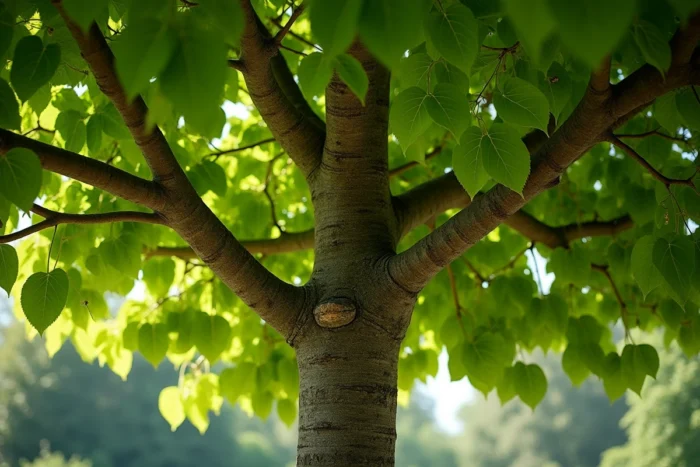
The lime tree is a classic tree in European parks and gardens, valued for both its shade and its properties. Its large heart-shaped leaves provide a high photosynthesis surface, and its honey-producing flowers enhance its ecological interest.
The lime produces oxygen steadily throughout the growing season, from May to October. It prefers deep, cool soils but can adapt to various conditions. Its deep rooting limits conflicts with nearby infrastructures.
Note: the honeydew secreted by lime tree aphids can dirty vehicles parked underneath. A detail to consider when choosing the location.
5. Poplar
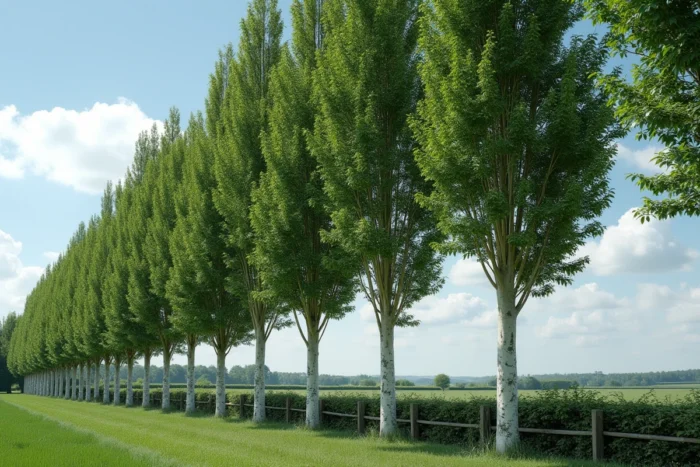
The poplar is the quintessential fast-growing tree in France. It can reach around thirty meters, giving it significant leaf biomass in just a few years. This growth mechanically translates into a rapid oxygen production from the moment of planting.
Its main advantage for residential use is its ability to quickly form a tall hedge or green screen. However, its shallow and spreading roots pose a real problem in proximity to buildings, sidewalks, and pipes.
- Avoid planting a poplar less than fifteen meters from a building or buried network
- Prefer varieties without fluff (the cotton from female poplars is allergenic and invasive)
- Plan for regular pruning, as the lifespan of this tree remains moderate
6. Mediterranean hackberry
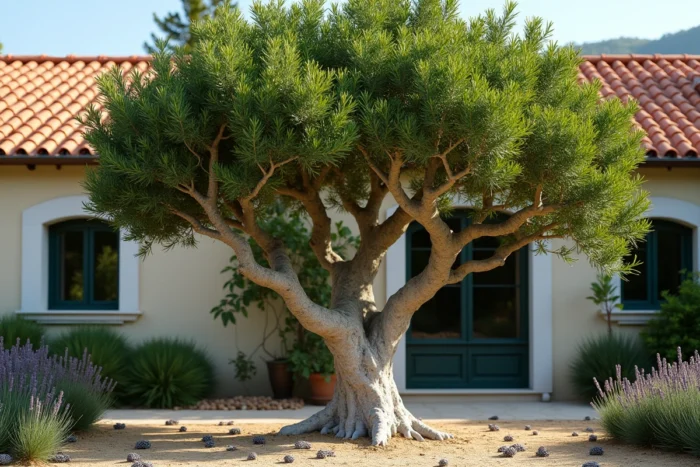
The Mediterranean hackberry is a lesser-known species to the general public, but increasingly recommended by landscapers for gardens in warm climates. Its dense foliage and drought resistance make it an excellent oxygen producer in Mediterranean regions, where other species struggle.
It forms a highly effective shade tree that significantly cools the surrounding air around the house. Planted to the south or southwest of the dwelling, it reduces the perceived temperature under its canopy by several degrees during heat waves.
Its spreading habit and moderate growth make it compatible with reasonably sized gardens. Its roots are less aggressive than those of the poplar, simplifying the choice of location.
7. Honey locust
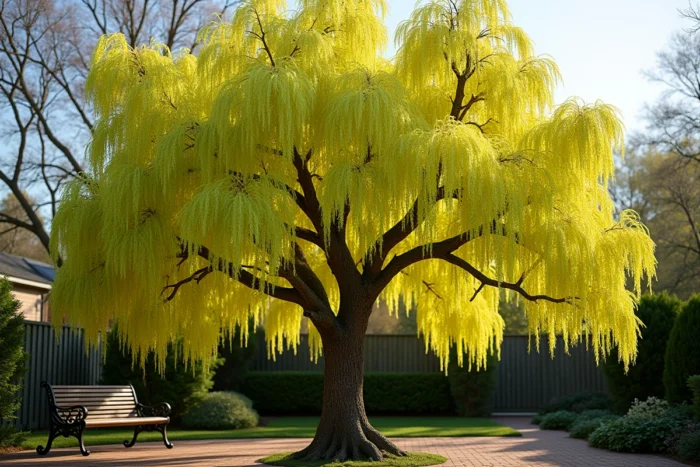
The honey locust (Gleditsia triacanthos) is a tree with finely dissected foliage that filters soft light. Less dense than the lime or oak, it still offers a active photosynthesis thanks to its numerous leaflets and sustained growth.
Its main advantage for a garden: it does not create overly opaque shade, allowing for the maintenance of grass or low plantings at its base. It tolerates poor soils, pollution, and drought episodes, which explains its increasing presence in urban and peri-urban developments.
- Choose a thornless variety, suitable for residential use
- The honey locust fixes nitrogen in the soil, naturally enriching the surrounding earth
- Its light silhouette is suitable for small gardens where a massive tree would create too much shade
The oxygen production of a tree depends as much on the species as on its age, health status, and local conditions. Planting a single specimen suited to its soil and climate remains more effective than multiplying poorly placed species. The right location, to the south or southwest of the house, maximizes both photosynthesis and thermal comfort in the garden.