The fashion trends of 2026 are not just about a color palette or a list of items to buy. This year, the wardrobe is structured around three forces: a regulation that redefines the rules of the textile game, a marked return of accessories as vectors of identity, and silhouettes that balance comfort and precision.
Anti-fast fashion law of July 2026: what changes for brands and consumers
The law of July 8, 2026, on ultra-fast fashion introduces new display obligations for the relevant platforms. It also includes a ban on advertising starting January 1, 2027. This legislation makes France one of the first countries to legislate so directly on the pace of textile production.
For consumers, the most visible consequence will be the gradual disappearance of aggressive promotional campaigns from certain online retailers. For established brands, this law accelerates a shift that has already begun: offering fewer collections, better sourced, with displayed traceability.
This regulatory framework aligns with a broader movement. The KPMG study on circular fashion in Europe highlights that the extended producer responsibility (EPR) now pushes stakeholders to treat circularity as a compliance issue, rather than just a marketing argument. The trend panoramas offered on the Toujours Le Bon Choix fashion site also incorporate this dimension into their reading grid of styles to adopt.
Statement accessories in 2026: the Dior fan and the return of ornamentation
The spring-summer 2026 shows confirmed a shift. Accessories no longer complement the outfit; they define it. At Dior, the fan has become the standout accessory of the season, worn as a style piece in its own right. This choice signals a return of ornamental objects in the daily wardrobe.
This rise of “statement” accessories is also observed in footwear. Closed-toe sandals are among the most spotted pieces for summer 2026. The principle: maintain a summery aesthetic while gaining functionality and protection.
The phenomenon goes beyond taste. As silhouettes simplify (straight cuts, raw materials), it is the details that create uniqueness. Architectural jewelry, structured bags, wide belts: the accessory absorbs the expressive weight that the silhouette relinquishes.
Colors and textile materials: choices that structure the season
Emerald green, cherry red, and glacier blue return in urban collections. These bold shades coexist with neutrals (sand beige, ecru) that serve as a base for more composed looks.
In terms of materials, two directions dominate:
- Plant-based leather is gaining ground in wardrobes, driven by regulatory pressure and a growing demand for alternative materials to animal leather.
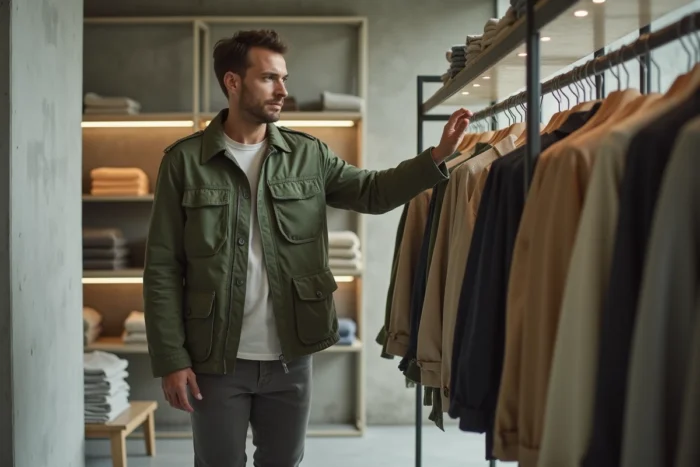
- Raw denim makes a comeback, but in more structured cuts than in 2024. Straight jackets are gradually replacing the oversized shapes that had dominated previous seasons.
- Functional textiles (water-repellent, breathable) are migrating from sportswear to ready-to-wear, driven by the trend of hybrid pieces that transition from the office to the outdoors.
This evolution in materials is not trivial. It reflects a collective arbitration between perceived sustainability and real comfort. The most visible fibers in 2026 are those that respond to a use, not a fashion effect.
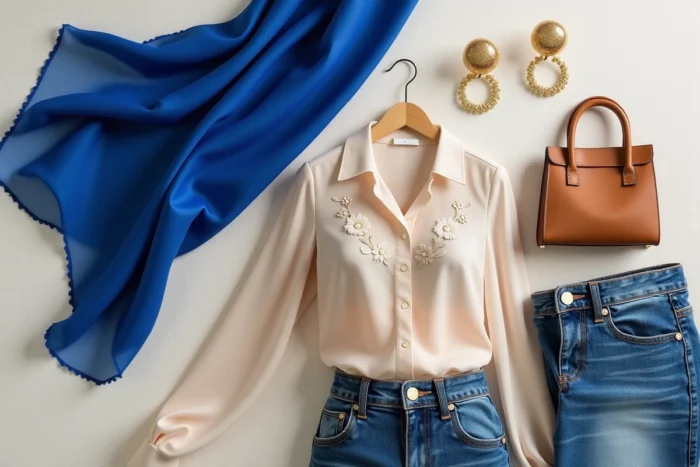
Fashion silhouettes 2026: defined waists and controlled volumes
The major break of this season concerns proportions. Waists are more defined, wide belts are back, and structured midi skirts take precedence over fluid cuts without markers. The 2026 wardrobe sketches a more precise silhouette than in recent years.
Wide pants remain present, but they are now paired with more fitted tops. This logic of contrast (a high volume/a low volume, rarely both at the same time) gives outfits a clarity that full oversized looks did not offer.
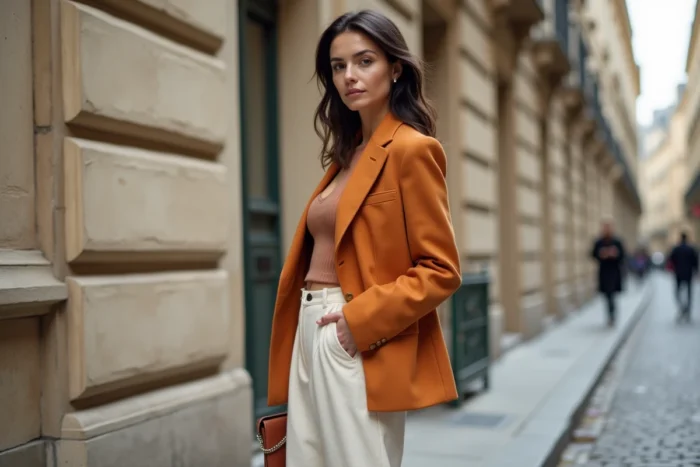
The short jacket establishes itself as the transitional piece. Worn over a long dress or wide pants, it modernizes a classic ensemble without distorting it. The lightweight blazer serves a similar role for evening outfits: a piece that structures without adding weight.
Expressive fashion and personalization: what the market values in 2026
This year, the market rewards expressive and personalized styles. The looks spotted at festivals and in social media content show a marked preference for composed outfits, mixing vintage pieces, bold accessories, and assertive colors.
This trend is not limited to women’s wardrobes. Men’s fashion collaborations are multiplying, with pieces that play on the codes of reimagined sportswear and more noble materials. Personal style takes precedence over imposed dress codes.
- Festival looks mix technical pieces and artisanal accessories, reflecting a wardrobe that refuses strict categories.
- Social media accelerates the spread of micro-trends, but durable pieces (leather jacket, raw denim, blazer) remain the pillars of wardrobes.
- The search for personalization drives some brands to offer customization options on their basics.
Fashion in 2026 is not read like a catalog of new items. Regulation, the rise of accessories, and the return of precise silhouettes form a triptych that connects each trend to a concrete use. The pieces that will last beyond the season are those that meet this triple requirement: textile compliance, visual uniqueness, adaptability to daily life.