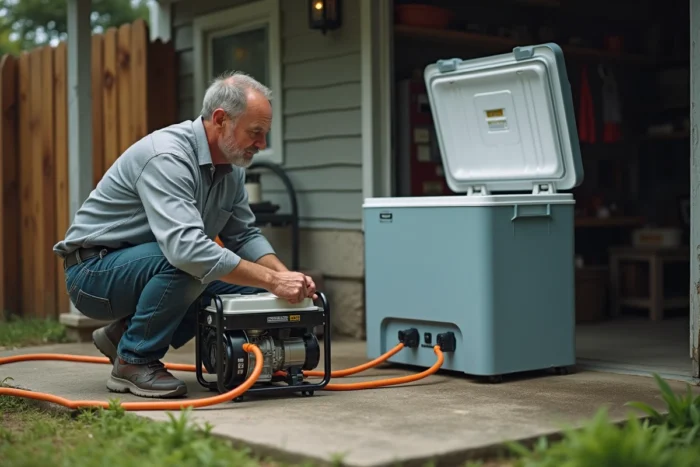
A domestic freezer consumes a modest power in stable operation, but its compressor requires a brief and intense current draw at each restart. This electrical characteristic influences the choice of the generator set, its power, the quality of the current supplied, and the connection method.
Compressor starting power: the parameter that sizes everything
The nameplate of a freezer indicates its nominal consumption, which is often modest. The trap lies elsewhere: at the moment the compressor restarts, the starting peak reaches two to three times the nominal power. This peak lasts only a few seconds, but the generator set must be able to provide it without tripping or dropping in voltage.
A freezer rated at 200 W in operation may require 600 W or more at startup. Choosing a generator set sized only on the nominal power means under-sizing the installation, with a risk of generator shutdown or damage to the compressor.
To size correctly, the method consists of identifying the device with the highest starting peak, then adding the nominal powers of the other devices connected simultaneously. The idea of using a generator set for a freezer therefore requires knowing this peak value precisely, which the manufacturer sometimes mentions under the term LRA (locked rotor amperage) or starting watts.
Sine wave and current quality for a freezer
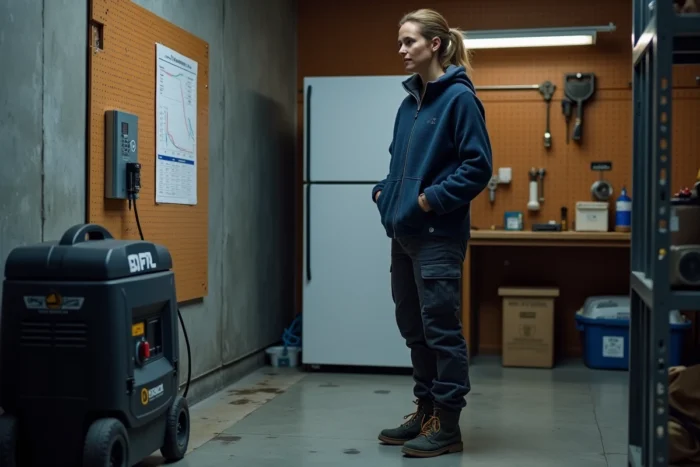
Power alone is not enough. A freezer has an electric motor compressor and, in recent models, an electronic control board. These components are sensitive to the shape of the incoming current.
A conventional generator set (known as “open frame” or conventional) often produces current with an approximate waveform. Voltage dips and frequency variations can cause abnormal heating of the compressor or disrupt the onboard electronics. This is why some manufacturers, such as Liebherr, advise against connecting to a generator set without special precautions.
An inverter generator delivers a pure sine wave, comparable to grid power. The electronic regulation maintains voltage and frequency within a narrow range, which protects the compressor and the management board. For a freezer, this technology represents the safest choice.
AVR (Automatic Voltage Regulation), present on some conventional generators, improves voltage stability without reaching the finesse of an inverter. It is an acceptable compromise if the freezer does not have sensitive electronics.
Secure electrical connection between generator and freezer
Connecting a freezer to a generator set is not just a matter of linking an extension cord between the two devices. The safety of the installation depends on the chosen connection method.
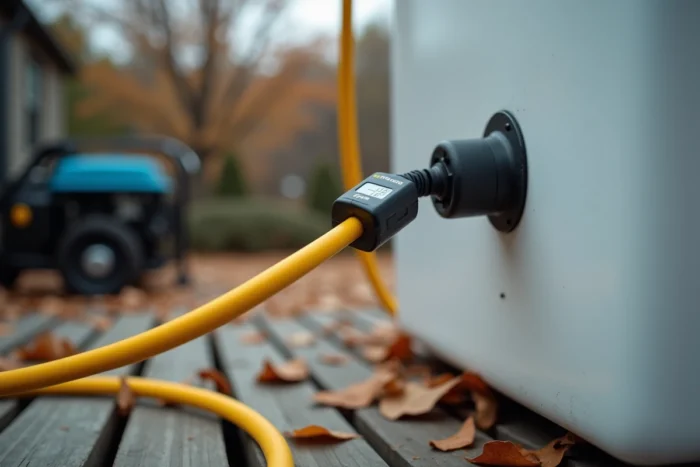
- The direct connection via an outlet on the generator is the simplest solution for a single device. The freezer connects to the generator’s outlet with a compliant cable, of appropriate gauge for the power.
- The source inverter (manual or automatic switch) allows switching the freezer’s power supply between the grid and the generator set. This device prevents any backfeed of current to the grid, a real danger for intervention technicians and for the home installation.
- The ATS (Automatic Transfer Switch) automates the switch: as soon as the grid goes down, it starts the generator and switches the power supply without manual intervention. This option is suitable for areas prone to frequent outages.
The so-called “male-male” connection (a cable with two male plugs connecting the generator to the electrical panel) remains a dangerous practice. It exposes to a risk of electrocution and backfeed to the grid. This type of improvised connection should be avoided.
Load management and autonomy in prolonged operation
A freezer does not operate continuously. Its compressor activates in cycles, alternating between running and resting phases. This characteristic offers some leeway on actual consumption and fuel management.
Connecting the freezer alone to the generator reduces the load and extends fuel autonomy. Adding other devices (lighting, refrigerator, pump) increases average consumption and requires a more powerful generator.
The logic of prioritization is simple:
- Identify the devices whose shutdown results in a loss (full freezer, medical refrigerator, lifting pump).
- Start the generator with the freezer alone, wait for the compressor to stabilize, then connect the secondary loads one by one.
- Never turn on two motorized devices simultaneously, as their starting peaks accumulate and may exceed the generator’s capacity.
A well-insulated freezer maintains its internal temperature for several hours after a power cut, provided the door is not opened. Delaying the generator’s startup by a few hours does not compromise the cold chain if the freezer was full and closed at the time of the outage.
Criteria for choosing the right generator set for a freezer
The market offers generator sets with very varied powers. For a freezer alone, a low-power model is more than sufficient, provided its peak power covers the compressor’s starting peak.
Three criteria guide the choice beyond raw power. The regulation technology (inverter or AVR) determines the quality of the current. The type of motorization (gasoline or diesel) affects autonomy and operating costs: a diesel engine consumes less over long durations, while a gasoline engine remains lighter and less expensive to purchase.
Noise level matters if the generator must run near a dwelling. Inverter models are generally quieter due to their variable engine speed.
An oversized generator set is not a better choice: it consumes more fuel for a low load and clogs up faster. Adapting the generator’s power to the actual needs of the freezer remains the best approach, both for the generator’s lifespan and for the fuel bill.