Organizing an unforgettable wedding involves making decisions on aspects that weigh very differently depending on the chosen format. Color palettes, reception venue, sound ambiance, smartphone management: the trends of 2026 are reshuffling priorities. This article compares the options that truly structure the day and analyzes the gaps between classic formats and emerging formulas.
Reception venue: estate, privatized restaurant, or compact format
The choice of venue influences the budget, the number of guests, and the logistics of the service providers. Three formats stand out clearly in 2026, each with its own constraints.
| Format | Typical Capacity | Customization | Main Constraint |
|---|---|---|---|
| Large estate | Large (over one hundred guests) | High but costly | Very early booking, coordination of many service providers |
| Privatized restaurant | Medium (forty to eighty guests) | Turnkey, simpler | Less freedom on decoration and schedule |
| Micro format (atypical rental) | Small (less than forty guests) | Maximum | External catering required, logistics at the couple’s expense |
The privatized restaurant is gaining ground against large estates, driven by a search for conviviality and simplicity. This option reduces the number of contacts: the caterer, the venue, and sometimes the service are managed by a single team.
On the other hand, couples who want total freedom over the staging and entertainment tend to choose atypical venues (old farm, art gallery, private garden). The price is not always lower: renting furniture, sound equipment, and coordination often falls to the couple.
Browsing the wedding articles from Les Mariés de Sylvie allows you to find concrete feedback on these different reception formats and their logistical implications.
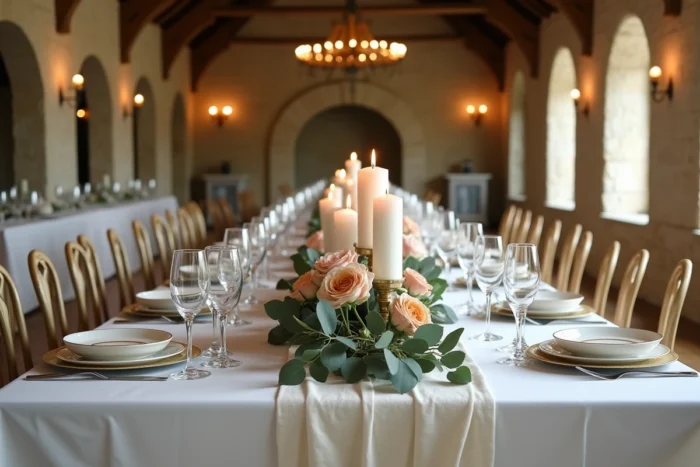
Color palette and decoration: the shift towards bold shades in 2026
Weddings in 2026 are moving away from all-pastel themes. The preferred palettes revolve around terracotta, burgundy, deep blue, sage green, and golden accents. The aesthetic aims to be more contrasted and assertive.
This change has a direct consequence on the choice of service providers. A florist used to pastel compositions does not work the same way with burgundy and dark green. Table linens, stationery, and the outfits of the witnesses must follow the same color coherence.
Organic modern decor: materials and suppliers
The trend known as “organic modern” relies on natural materials: linen, artisanal ceramics, raw wood, rattan, local and seasonal flowers. This approach reduces the logistical footprint (less transport, no imported flowers out of season) and gives a more tactile style to the table.
- Raw linen for table runners and napkins, replacing satin or organza.
- Artisanal ceramics for dishes, often rented from local potters rather than purchased.
- Seasonal flowers grown near the reception venue, which requires confirming available varieties with the florist several months before the date.
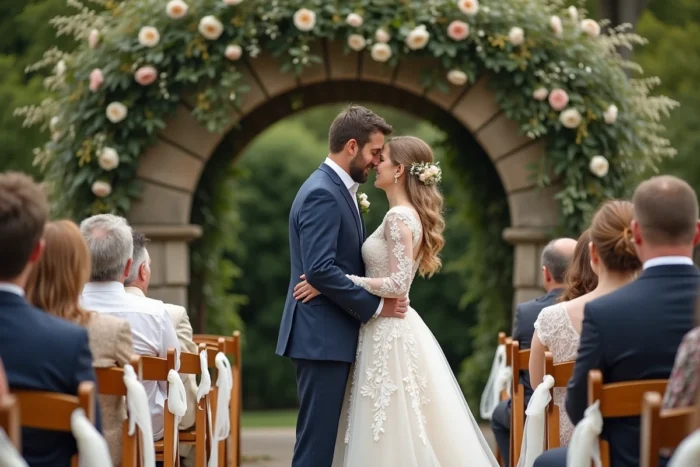
- Wood and rattan for seating or ceremony arches, provided the furniture’s sturdiness is verified for outdoor use.
The style of the decoration also influences the photographic ambiance. An organic modern decor is better suited to diffuse natural light than to powerful artificial lighting.
Phone-free wedding: logistical constraint or true enhancement of ambiance
Confiscating smartphones at the entrance of the ceremony is becoming a recommended practice by several service providers in 2026. The idea is to replace phones with instant cameras to preserve emotion and limit the spectator effect during key moments.
The impact on the ambiance is real. Without screens raised above heads, the professional photographer works unobstructed. Guests are physically present, not behind a screen. Instant photos become a decorative element and a tangible memory.
Practical implementation of the phone-free concept
The setup requires clear communication in advance. The invitation or wedding website should mention the guideline. On the day, a sign at the entrance and a collection box are sufficient. Planning a specific moment (end of the ceremony, start of the cocktail) when phones are returned avoids frustrations.
The cost of instant cameras and film remains a budget item to consider. Couples who adopt this formula see it as an investment in the quality of memories rather than their quantity.

Wedding budget: the items that truly weigh in the choice of style
The budget for a wedding is rarely distributed evenly. Three items absorb the majority of expenses: the reception venue (with catering), photography/video, and outfits. Everything else (stationery, floral decoration, entertainment, music) shares the remaining fraction.
The organic modern trend and bold palettes change the distribution. Renting artisanal dishes costs more than standard dishes. Conversely, choosing local and seasonal flowers significantly reduces the floral budget compared to exotic imported compositions.
The phone-free format adds an item (instant cameras, film) but may reduce the video budget if the couple believes that professional images are sufficient, without editing sequences filmed by guests.
The choice of venue remains the most determining lever. A privatized restaurant with integrated catering simplifies management and makes the budget clearer from the signing. An estate offers more creative margin, but each additional service adds up separately.
Trade-offs between style, ambiance, and budget play out over these few items. Focusing decisions on the venue, palette, and format of the day structures the rest of the organization coherently, without dispersing energy on secondary details.