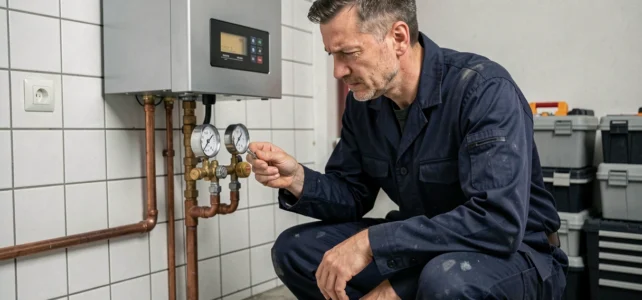
A central heating system relies on four distinct technical elements: heat production (boiler, heat pump), distribution (pipes and circulator), emission (radiators, convectors), and regulation (thermostat, thermostatic valves). Maintaining a heating system in Brussels is not limited to having the boiler serviced once a year. Each link in this chain influences the overall efficiency and energy consumption of the home.
Ban on heating oil in Brussels: what it changes for maintenance
Since June 1, 2025, the installation or replacement of an oil boiler is prohibited in the Brussels Region, except by exemption. This measure alters the maintenance strategy for households still equipped with an oil boiler.
As long as the device is operational, its maintenance remains mandatory and subject to the same energy performance checks as before. However, in the event of a serious breakdown or obsolescence, the replacement must be towards another energy source (gas, heat pump, district heating). It thus becomes strategic to extend the lifespan of the existing installation through rigorous monitoring while anticipating the transition.
The new Brussels regulations also restrict natural gas and oil boilers in new projects or those considered new. For homeowners considering a major renovation, the choice of replacement system must be integrated from the diagnostic phase. Several tips for heating in Brussels help structure this reflection in advance.
Energy performance check in Brussels: three types of verification to distinguish
The Brussels regulatory framework is not limited to annual maintenance. It distinguishes three categories of checks, each triggered by a different event.
- The periodic check: carried out at regular intervals by a certified technician, it verifies combustion, emissions, and the general condition of the device. The frequency depends on the type of fuel and the power of the installation.
- The check upon installation: mandatory when installing a new heating device, it validates the compliance of the commissioning before any use.
- The exceptional check: required after an intervention on combustion or a relocation of the device. This type of check is often unknown to homeowners, who believe they are compliant with only the periodic maintenance.
Confusing these three checks can lead to non-compliance during an energy performance inspection. A certified heating technician can clarify which applies to each situation.
Maintenance of the distribution circuit: the neglected link
The majority of articles on heating maintenance focus on the boiler. The distribution circuit (pipes, circulator, expansion tank) deserves comparable attention.
Pipes that are poorly insulated in a basement or ventilated void lose a significant amount of heat before it reaches the radiators. Insulating these conduits with appropriate sleeves is a modest investment that reduces thermal losses in the network.
The circulator, this small pump that circulates hot water in the circuit, consumes electricity continuously during the heating season. An old circulator often runs at a fixed speed, even when the heat demand is low. Variable speed models adjust their flow based on actual needs.
Bleeding and descaling radiators
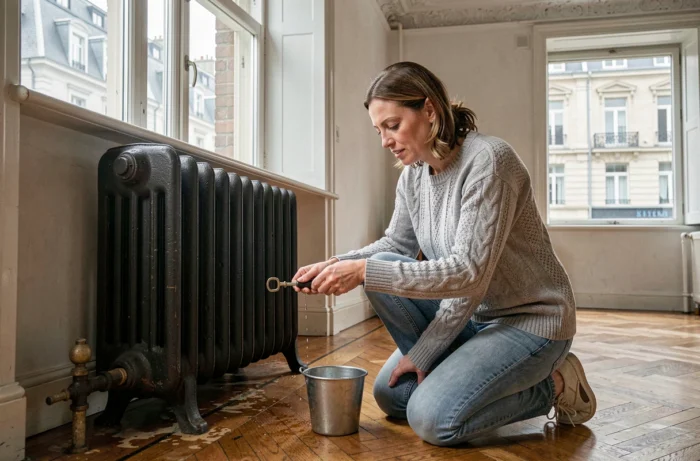
The presence of air in the radiators creates cold spots at the top. Bleeding at the beginning of the season, radiator by radiator, removes this trapped air and restores a uniform heat distribution.
Over the years, sludge (metal oxides, limescale deposits) accumulates in the circuit. This phenomenon, known as sludge accumulation, reduces water flow and forces the boiler to work harder. Professional descaling every few years helps restore proper efficiency, especially in older installations with cast iron radiators.

Heat pump in Brussels: maintenance different from that of a boiler
With restrictions on oil and gas in new installations, the heat pump becomes the reference system for new Brussels installations. Its maintenance fundamentally differs from that of a combustion boiler.
No combustion means no flue gas checks or chimney sweeping. Maintenance focuses on other points: cleanliness of the outdoor exchanger, level and pressure of the refrigerant, condition of the filter in the hydraulic circuit, proper functioning of the compressor.
A buildup of dirt on the outdoor unit (leaves, dust, residual frost) quickly degrades performance. Seasonal cleaning of this unit is easy to perform and prevents measurable overconsumption on the bill.
Regulation and heating curve
Whether the system relies on a boiler or a heat pump, adjusting the heating curve remains an underutilized optimization lever. This curve defines the temperature of the water sent into the circuit based on the outside temperature.
A curve that is too high circulates water that is hotter than necessary, increasing losses and consumption. Lowering the starting temperature by a few degrees, when the building’s insulation allows, improves efficiency without reducing perceived comfort.
Thermostatic valves on each radiator complement this adjustment by adapting the heat room by room. A room kept cooler than a living room, for example, reduces overall consumption without intervention on the boiler itself.
The maintenance of a heating system in Brussels is now framed within a rapidly changing regulatory context. Anticipating the replacement of an oil device, distinguishing the three types of energy performance checks, and not neglecting the distribution circuit are concrete levers for maintaining efficient heating over time.