
In Switzerland, subsidies for the energy renovation of buildings come from several levels: the Confederation, cantons, municipalities, and sometimes energy suppliers. The amounts, conditions for granting, and covered works vary depending on the canton where the building is located. Understanding this structure before launching a project helps avoid scheduling errors that could nullify the right to assistance.
Building Program and Impulse Program: two distinct federal schemes
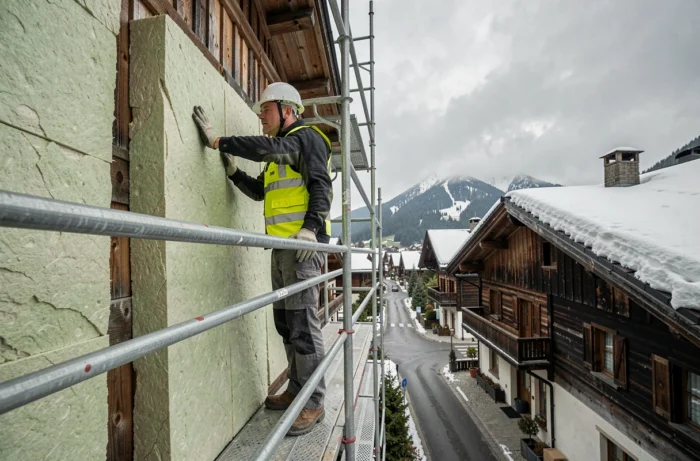
The Building Program is the main subsidy instrument in Switzerland. Co-financed by the Confederation and the cantons, it covers thermal insulation (roof, facade, floor), window replacement, overall energy renovation, and the transition to a renewable heating system. Each canton adapts the scales and technical requirements to its own energy policy.
Since January 1, 2025, a second scheme complements this program: the Impulse Program. It targets cases that the Building Program did not cover or covered minimally, particularly the replacement of decentralized electric heating and large fossil installations over 70 kW. A bonus related to the efficiency of the building envelope has also been introduced.
In 2025, the funds committed by the Confederation and the cantons reached a total of 636.4 million francs, of which 516.4 million were allocated under the Building Program. These amounts reflect a net intensification of public effort, and project holders submitting a request on subventionsbatiment.ch gain access to a centralized overview of available assistance by canton.
Cantonal scales: amounts that vary and can decrease
A common mistake is to assume that subsidy scales remain stable from year to year. Cantons revise their scales every year, and the amounts can decrease as well as increase. A project planned over two years with subsidy assumptions based on the previous year’s scales risks a real budget discrepancy.
Differences between cantons can sometimes be considerable. The same replacement of a fossil boiler with a heat pump can trigger very variable assistance depending on whether the building is located in Zurich, Valais, or Jura. The type of subsidized works also differs: some cantons fund the insulation of buried walls, while others do not.
Common eligibility conditions
- The works must achieve a level of energy performance defined by the canton, not just replace an element with the same one
- The building must generally have been constructed before a certain cutoff date (often linked to the implementation of cantonal energy standards)
- A CECB certificate (Cantonal Energy Certificate for Buildings) is required in most cantons for overall renovations, and sometimes for individual measures
- Simply replacing windows is not always sufficient to trigger assistance: some cantons require it to be part of a broader renovation of the envelope
Subsidy application timeline: the submission date is decisive
The most costly trap in the process concerns the timeline. The subsidy application must be submitted before the start of the works. The relevant date is that of the submission of the file, not the date when the works are scheduled or ordered. Any project initiated without written confirmation of the subsidy exposes the owner to outright rejection.
Specifically, the sequence to be followed is strict:
- Conduct an energy diagnosis (CECB or equivalent audit according to the canton)
- Define the renovation measures with detailed quotes
- Submit the subsidy application to the competent cantonal service
- Wait for the formal grant decision before signing any execution contract
- Carry out the works within the timeframe set by the decision
The processing time varies by canton and the time of year. Some services are overwhelmed in spring when summer renovation projects flood in. Anticipating by several months is not excessive.
Municipal subsidies and complementary assistance: cumulative but regulated
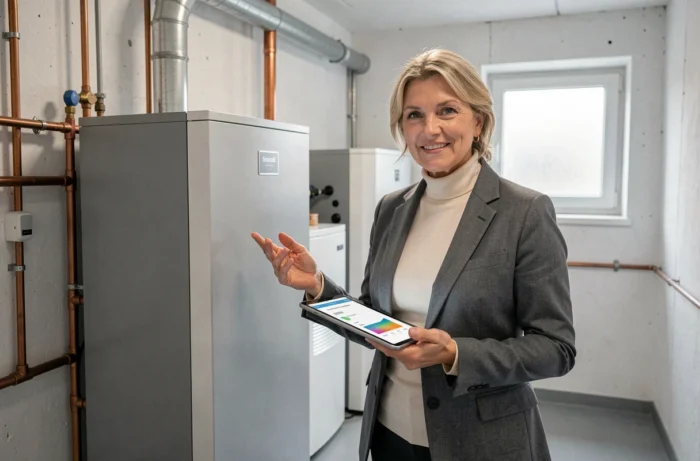
Beyond federal and cantonal programs, some municipalities grant their own subsidies for energy renovation. Some energy suppliers (electricity, gas) also offer assistance, particularly for the installation of heat pumps or thermal solar panels.
The accumulation of several aids is generally allowed, but the total amount cannot exceed a defined percentage of the cost of the works. This ceiling varies by canton. A municipal subsidy thus serves as a complement, not a replacement.
To identify all available aids, the platform francsenergie.ch allows users to search for encouragement programs by postal code and type of measure. This cross-referenced search helps avoid missing out on local assistance that covers a specific item not addressed by the Building Program.
Tax deductions and energy renovation
Energy renovation expenses are deductible from income tax in most cantons. When the amount of the works exceeds the taxable income of a year, the excess can often be carried over to the following tax years. This possibility of spreading sometimes changes the financial strategy of a project and deserves to be integrated into the overall calculation, alongside direct subsidies.
The net amount payable by the owner, after subsidies, tax deductions, and energy savings over time, is often significantly lower than the initial quote. But this calculation only makes sense if the subsidy file has been submitted correctly, before any order for works.