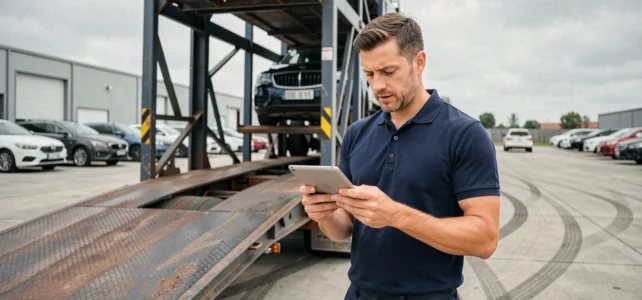
Road transport in France is going through a period of intersecting tensions: rising fuel costs, tightening low emission zones (LEZ), and a slowdown in fleet renewal. Fleet registrations (passenger cars and light commercial vehicles) are declining year-on-year, reflecting a structural hesitation among companies regarding investment choices, as regulatory constraints tighten.
LEZ and Crit’Air: the regulatory constraint reshaping flows
LEZ restrictions directly alter road transport decisions. From January 1, 2025, Greater Paris will prohibit the circulation of Crit’Air 3 vehicles within the intra-A86 perimeter. Other French metropolitan areas are applying similar restrictions, forcing professionals to rethink their routes.
For a transporter whose fleet still predominantly runs on diesel, these restrictions are not just a simple route adjustment. They require segmenting deliveries: some vehicles can no longer serve city centers, leading to load breaks and transfers to compliant vehicles. The cost of this reorganization is rarely anticipated in transport budgets.
Companies consulting the Signal Auto website for transport can assess the available options for transporting their vehicles while considering these new geographical constraints. The question is no longer just about finding the shortest route, but about finding an accessible route with the right vehicle.
Diesel vs Electric: total cost of ownership as a selection criterion
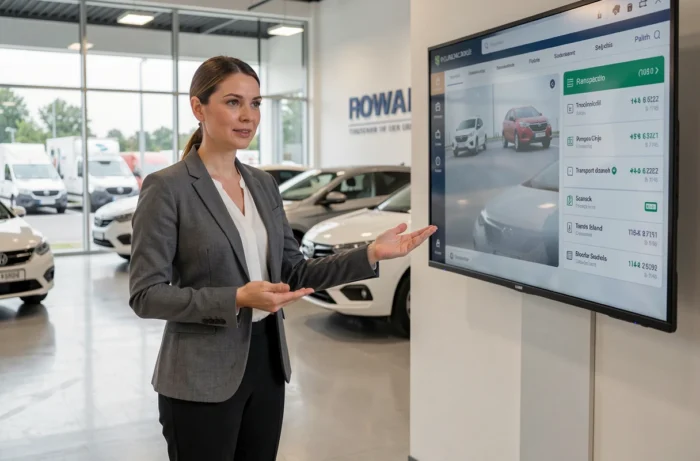
Diesel still accounts for about 88% of new commercial vehicle registrations in France. This dominance masks a gradual shift. A 2026 study by Transport & Environment shows that the total cost of ownership of electric commercial vehicles is becoming more advantageous than diesel in certain segments in France.
This TCO shift does not apply to all uses. Short and repetitive urban trips, typical of last-mile delivery, favor electric vehicles. In contrast, long-distance routes with heavy loads remain more economical with thermal vehicles, due to a lack of sufficiently dense charging infrastructure on secondary routes.
Criteria to check before switching a fleet
- The average daily mileage per vehicle: below a certain threshold, electric vehicles can handle most routes without intermediate charging
- The availability of charging stations at the depot or on-site, which conditions the rotation of vehicles between two services
- The schedule of LEZ restrictions in the served metropolitan areas, to anticipate the regulatory obsolescence of diesel vehicles
- The residual value differential at resale: diesel commercial vehicles lose value faster in areas where restrictions are tightening
Field reports vary on the exact break-even point. Some fleet managers report an advantage from the second year, while others observe a persistent additional cost related to charging infrastructure. The analysis must be done vehicle by vehicle, not based on an average fleet.
Optimization of road transport routes: beyond GPS
Route planning is no longer limited to calculating the fastest route. Transport management software (TMS) now incorporates variables that public tools ignore: Crit’Air restrictions by zone, delivery time slots imposed by municipalities, and real-time residual capacity of vehicles.
A well-configured TMS reduces empty kilometers, which represent a significant portion of transport costs. The principle is simple: instead of sending an empty truck back after a delivery, the system assigns it a return load or a profitable detour. This flow consolidation logic works even better when the order volume is predictable.
What tools alone cannot solve
A software optimizes what it is given. If the input data is incomplete (approximate weights, inaccurate addresses, floating time slots), the generated transport plan will be suboptimal. The quality of the data determines the quality of the optimization.
Companies that digitize their order forms and delivery notices see a rapid improvement in route reliability. Those that maintain parallel manual processes create blind spots that the TMS cannot compensate for.
Fleet renewal: why companies are hesitating
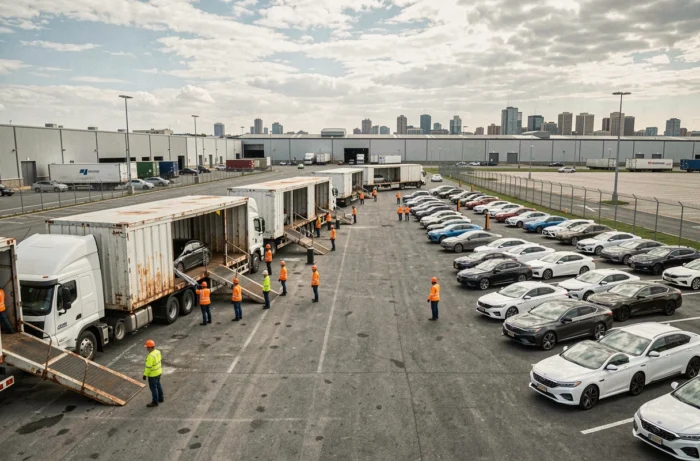
The decline in fleet registrations is not solely explained by hesitation regarding electric vehicles. Several factors are at play.
The first is financial. The list prices of new vehicles, whether thermal or electric, have increased in recent years. Companies are extending the holding period of their vehicles to amortize this investment.
The second is regulatory. LEZ schedules vary from one metropolitan area to another, complicating decision-making. A Crit’Air 2 commercial vehicle is still allowed everywhere today, but could be excluded from certain areas in the coming years. Investing in a vehicle whose legal usage duration in the city is uncertain hinders decision-making.
The third is operational. Switching to electric requires training drivers, adjusting schedules to charging times, and sometimes modifying depot infrastructure. These indirect costs (training, civil engineering, scheduling adjustments) add to the vehicle price and weigh on the actual return on investment.
Green certificates in transport: a lever or mere display
Some transport providers offer “green certificates” intended to offset the carbon footprint of deliveries. The mechanism generally relies on purchasing carbon credits or funding compensation projects.
The real value of these certificates depends on the calculation methodology used by the provider. Without independent auditing or standardized benchmarks, a green certificate can reflect a sincere commitment or merely a communication operation.
- Check if the provider publishes its emission calculation methodology and has it audited
- Distinguish compensation programs (tree planting, wind projects) from actual emission reductions on routes
- Request traceability of purchased carbon credits, their registration record, and their issuance date
The effectiveness of these mechanisms varies depending on the providers and the benchmarks used. Some transporters use them as a transition lever, while others use them as a commercial argument without changing their practices.
Road transport in 2026 is no longer just a choice between speed and cost. LEZ constraints, energy transition, and pressure on data transform every fleet decision into a technical arbitration. Companies that accurately document their flows and anticipate regulatory schedules will make their decisions on a more solid basis than those relying on a single tool or label.